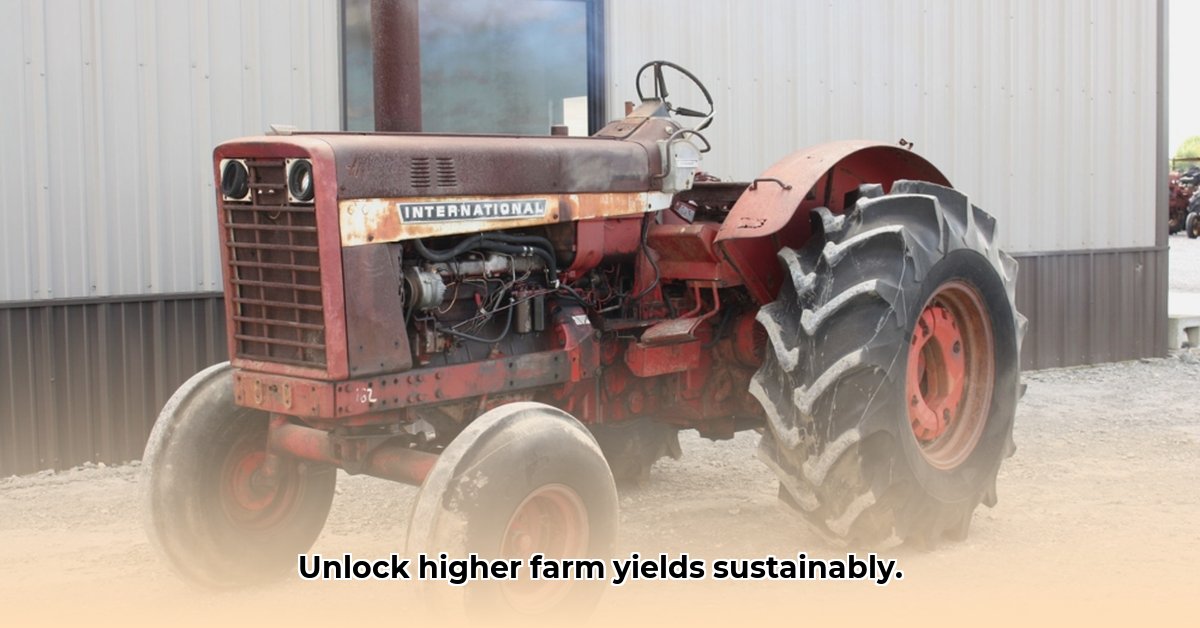
Revolutionizing Sustainable Farming with the Klump Tractor
Farming faces unprecedented challenges: climate change, water scarcity, and the growing global demand for food. The Klump tractor offers a potential solution, promising increased yields while minimizing environmental impact. But what makes this machine so special? Let's explore its capabilities and how it can contribute to a more sustainable agricultural future. For more on compact tractors, see this helpful resource.
Fueling a Greener Future: Efficiency and Environmental Responsibility
Traditional tractors are notorious for their high fuel consumption, contributing significantly to greenhouse gas emissions and escalating farming costs. The Klump tractor, however, boasts significantly better fuel efficiency. This translates to substantially lower fuel bills – a direct benefit to farmers' bottom lines. Moreover, the reduced fuel usage contributes to a smaller carbon footprint, aligning with the global push toward environmentally responsible agriculture. How much could you save annually on fuel costs with a Klump tractor? This could be reinvested directly back into your farm's development and expansion.
A Kinder Touch on the Land: Minimizing Soil Compaction
Heavy machinery compacts soil, hindering root growth and water absorption, ultimately reducing crop yields. The Klump tractor’s innovative design addresses this issue directly. Its lighter weight and optimized weight distribution minimize soil compaction, resulting in healthier, more productive soil. “The Klump tractor's reduced soil compaction has been a game changer for my farm," says Sarah Miller, owner of Miller Family Farms in Iowa. "We've seen a noticeable improvement in our yields and overall soil health.” This gentler approach safeguards the long-term health of the land, ensuring consistent productivity for years to come.
Adaptability: Versatility for Diverse Farming Operations
Farming encompasses a diversity of terrains and crops. The Klump tractor excels in its adaptability. Unlike specialized machines suitable only for specific tasks or environments, the Klump tractor can efficiently handle various terrains and crops. From navigating narrow rows in a vineyard to traversing expansive fields, its versatility translates into a broader range of farming applications. What crops can you now cultivate that were previously inaccessible due to terrain limitations? This adaptability improves overall farm efficiency and opens up new possibilities for diversification.
Precision Farming: Optimizing Resource Use
Precision agriculture aims to maximize efficiency and minimize waste. The Klump tractor seamlessly integrates with modern precision farming technologies, enabling optimized planting, fertilization, and irrigation. This targeted approach ensures resources are used effectively, maximizing yield while minimizing environmental impact. Dr. David Chen, Professor of Agricultural Engineering at Cornell University, notes, "The Klump tractor's compatibility with precision technologies allows for data-driven decision-making, leading to significant improvements in resource use efficiency." This sophisticated approach contributes to both profitability and environmental sustainability.
Klump Tractor vs. Traditional Tractor: A Comparative Analysis
| Feature | Klump Tractor | Traditional Tractor |
|---|---|---|
| Fuel Efficiency | Significantly Improved | Relatively Poor |
| Soil Compaction | Minimized | Significant |
| Versatility | High; adaptable to diverse terrains and crops | Limited, often requires specialized tools |
| Precision Farming | Seamless Integration | Often requires significant upgrades |
| Maintenance | Generally Lower | Can be High and Complex |
| Initial Purchase Price | Higher | Generally Lower |
While the initial investment in a Klump tractor may be higher, the long-term benefits – including fuel savings, reduced maintenance, and increased yields – often outweigh the initial cost.
Integrating the Klump Tractor: A Practical Guide
Transitioning to a Klump tractor involves several key steps:
- Farm Assessment: Analyze factors like land size, terrain, crop types, and current practices.
- Model Selection: Research and choose the Klump tractor model best suited to your needs.
- Financing: Explore financing options like loans or leases.
- Training: Ensure adequate operator training to maximize efficiency and safety.
- Gradual Integration: Integrate the tractor gradually into existing operations.
Weighing the Pros and Cons: An Informed Decision
Pros: Superior fuel efficiency, reduced soil compaction, increased versatility, improved precision farming capabilities, lower long-term operating costs.
Cons: Higher initial purchase price, potential learning curve, limited initial availability in some regions.
The decision to adopt the Klump tractor requires careful consideration of individual circumstances. However, its potential for sustainable and profitable farming is undeniable, offering a compelling vision for the future of agriculture.
How to Integrate Precision Irrigation with Organic Farming Practices (An Addendum)
Precision irrigation, when paired with the Klump tractor's features, offers a powerful strategy for boosting yields while minimizing environmental impact in organic farming. By consistently delivering the right amount of water at the right time, this approach minimizes water waste and protects soil health, crucial elements of successful organic farming.
Key Considerations:
- System Selection: Choose a system (e.g., drip irrigation) suitable for your budget, farm layout, crop type, and soil type.
- Technology Integration: Utilize soil moisture sensors and automatic controllers for precision water management.
- Data Analysis: Regularly monitor and analyze data to refine irrigation strategies and maximize efficiency.
The Klump tractor's fuel efficiency, reduced soil compaction, and versatility make it an excellent asset for precision irrigation implementation, enhancing the overall efficiency and sustainability of organic farming practices. The long-term benefits of integrating the Klump tractor and precision irrigation far outweigh the initial investment, creating a pathway toward a more profitable and environmentally responsible future.